
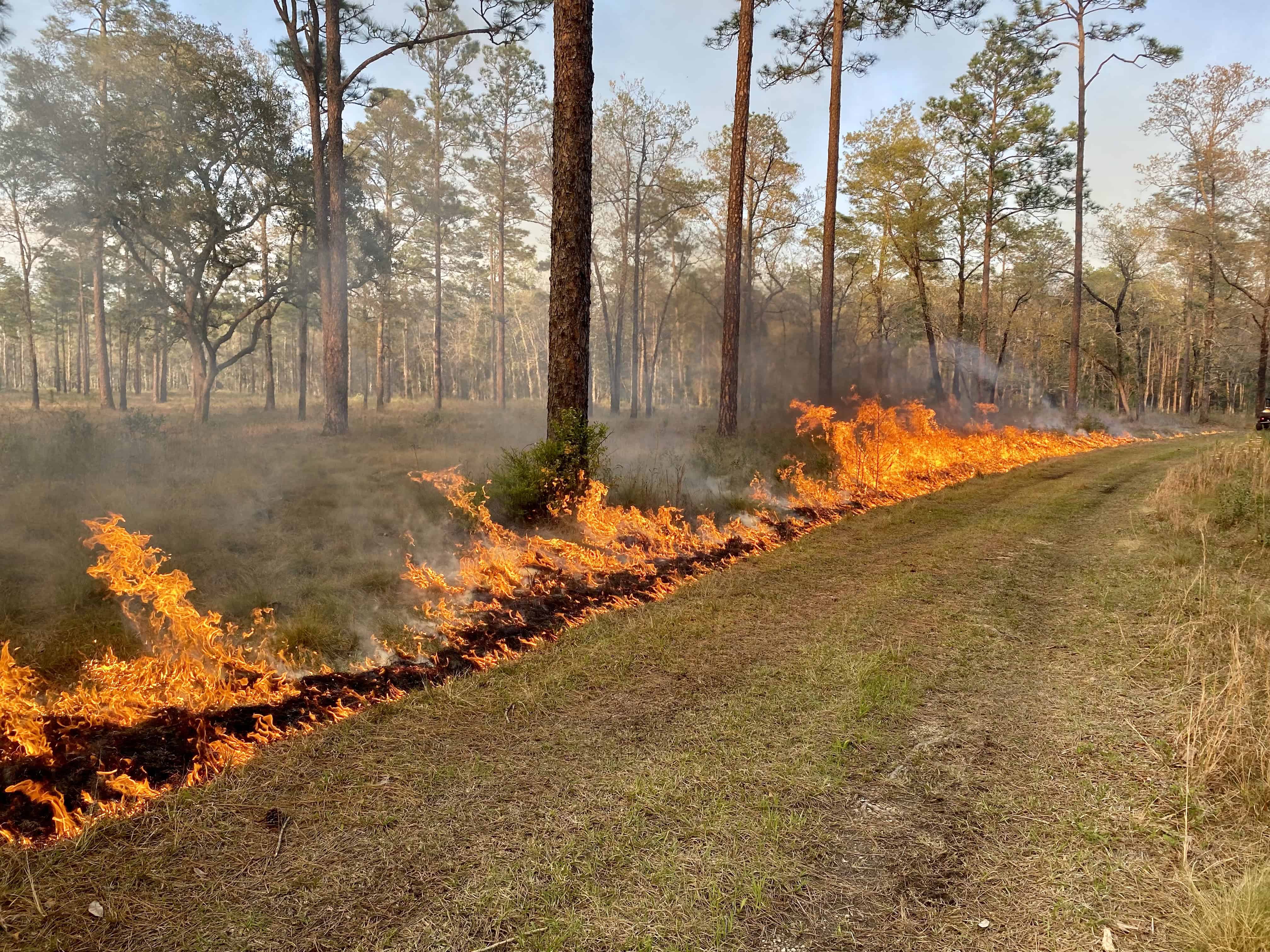
Across the Southeast, prescribed fire remains one of the most effective tools for improving wildlife habitat and maintaining healthy timber stands. While fire can be applied in multiple seasons, spring burning offers distinct advantages for landowners focused on deer, turkey, quail, and effective property management.
Here’s why spring burning continues to be a foundational practice for wildlife management in southern states like Alabama, Florida, Georgia, and Mississippi.
Fire Is Natural to Southern Landscapes
Many Southeastern ecosystems, especially pine forests, evolved with regular fire. According to the U.S. Forest Service, prescribed fire helps reduce hazardous fuel buildup, recycle nutrients back into the soil, and stimulate healthy vegetation growth. These processes are essential for maintaining wildlife habitat and reducing wildfire risk.
The Alabama Department of Conservation and Natural Resources notes that prescribed fire improves habitat quality for species such as white-tailed deer and Eastern wild turkey by rejuvenating natural food sources and improving understory conditions.
1. Immediate Forage Improvement for Deer
One of the biggest advantages of spring burning is rapid green-up. When a tract is burned in late winter or early spring, old thatch and dead vegetation are removed just before the growing season begins. This allows sunlight to reach the soil surface, triggering a flush of tender new growth.
According to Mississippi State University Extension, newly sprouted vegetation following a prescribed burn is typically higher in protein and digestibility than mature plant material. For white-tailed deer recovering from winter stress and entering antler growth season, that nutrient-rich forage is critical. Spring burning essentially resets the nutritional clock on your property.
2. Improved Turkey Habitat and Brood Cover
Spring burns also create ideal structure for wild turkeys. The Mississippi Department of Wildlife, Fisheries, and Parks explains that prescribed fire opens the understory, increasing insect abundance and promoting forbs, both of which are vital for turkey poults during brood-rearing season.
Recently burned areas provide:
-
Open ground for strutting and movement
-
Improved nesting visibility
-
Increased insect populations for poults
The result is a more functional and usable landscape during turkey season and beyond.
3. More Predictable Burn Conditions
From a management standpoint, spring burning is often more predictable and easier to control.
According to the Alabama Forestry Commission, late winter and early spring typically offer moderate temperatures and higher relative humidity compared to peak summer months. These conditions help reduce fire intensity and make burns easier to manage safely.
For many private landowners, spring offers the most practical window to conduct prescribed fire under controlled conditions.
4. Maintains Open Pine Stands
In pine-dominated systems, frequent low-intensity fire is essential to maintaining open structure.
The U.S. Forest Service Southern Research Station has documented that regular prescribed fire reduces understory competition, limits fuel buildup, and maintains the open conditions that many Southeastern wildlife species depend on.
Spring burning helps:
-
Control small woody stems
-
Reduce leaf litter accumulation
-
Maintain visibility and access
-
Support native grasses and forbs
For landowners managing pine plantations or natural pine stands, this maintenance burn keeps habitat functional without excessive stress on overstory trees.
5. Reduced Wildfire Risk
Beyond wildlife benefits, spring prescribed fire significantly lowers wildfire risk.
By reducing accumulated fuel loads before the hotter, drier summer months, landowners decrease the potential for catastrophic wildfire. The U.S. Forest Service consistently identifies prescribed burning as one of the most effective methods for mitigating severe wildfire behavior in fire-adapted ecosystems.
In other words, spring burning protects both habitat and long-term timber value.
6. Sets the Stage for Long-Term Habitat Management
Spring burning works exceptionally well as part of a long-term rotation plan. Burning sections of a property every 2–3 years creates varied plant growth stages across the landscape.
That diversity ensures:
-
Fresh forage somewhere on the property each year
-
Cover diversity for bedding and nesting
-
Consistent wildlife use
Many conservationists and wildlife biologists recommend rotational burning as a cornerstone of effective habitat management.
Stewardship That Shows
Well-managed land stands out. Open pine understories, strong native ground cover, and visible signs of active stewardship signal quality to both wildlife and potential buyers.
Spring prescribed fire is one of the clearest indicators that a property is being intentionally managed rather than simply left alone.
Final Thoughts
Spring burning offers powerful, practical benefits:
-
Immediate high-quality forage
-
Improved turkey habitat
-
Safer, more manageable burn conditions
-
Maintenance of healthy pine ecosystems
-
Reduced wildfire risk
For landowners in Alabama and across the Southeast, spring prescribed fire remains one of the smartest and cost-effective investments you can make in your property’s wildlife potential and long-term value.
If you’re evaluating land for purchase or considering selling, understanding a tract’s burn history can reveal a great deal about its habitat quality and its future potential. If you need help getting started with your habitat plan, or if you’re in the market to buy or sell land in Alabama, reach out to the land pros at RF Properties. We have experienced burn managers on staff that are eager to help and can make a realistic plan for your property.

Connect with us