
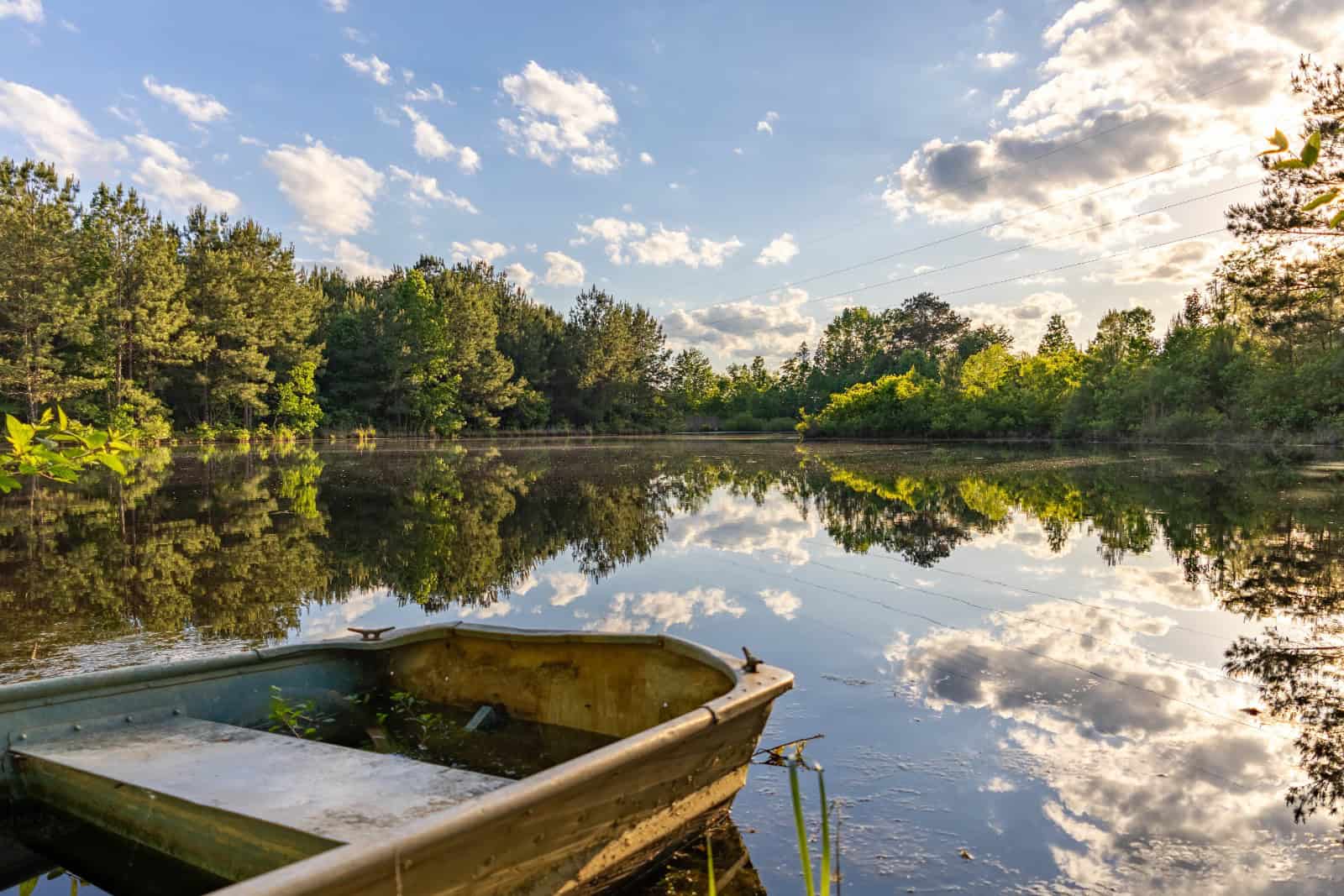
There’s something timeless about a pond on your property. Whether it’s the kids casting their first fishing line, enjoying a cup of coffee overlooking the water, or a place to cool off in the hot summer, a well-built pond can become more than a feature, it can be the focal point of your entire property.
Quality ponds don’t happen by accident. They’re shaped by thoughtful planning, smart engineering, a clear vision of how the pond will be used, and partnering with the right professionals to do the work. Before the first scoop of dirt is moved, here are the biggest considerations every landowner should understand.
Location and Water Source: The Foundation of a Successful Pond
Every great pond starts with the right location.
The most important question isn’t how big the pond will be, it’s where the water will come from and how reliably it will stay full. In the Southeast, ideal pond sites often take advantage of natural drainages, springs, shallow valleys, or draws where water can be captured effectively.
Key factors to evaluate:
-
Watershed size: A pond needs enough land draining into it to maintain water levels, especially during dry periods.
-
Soil composition: Clay-rich soils are ideal because they hold water naturally. Sandy soils may require additional compaction.
-
Natural topography: The best ponds work with the land, not against it. Using existing contours and natural springs reduces construction costs and improves long-term stability.
A pond built in the wrong spot may look good at first, but over time it can become muddy or dry up completely.
Design and Structure: Building for Beauty and Longevity
A pond should be engineered with both function and aesthetics in mind.
Depth, shape, and shoreline design all influence how the pond looks, how it performs, and how enjoyable it is to use. Be sure to use an experienced, trusted contractor or pond builder to get the best results.
Considerations that matter:
-
Depth variation: A mix of shallow and deep areas supports healthy fish populations and reduces weed growth.
-
Dam and spillway design: Properly engineered dams and emergency spillways protect the pond during heavy rain events and prevent costly failures.
-
Shoreline contours: Gentle slopes create safer access for swimming and fishing, while irregular shorelines add natural beauty and habitat diversity.
A thoughtfully designed pond feels natural, but it’s backed by precise planning and construction.
Intended Use: Fish, Family, and Future Value
Not all ponds are built for the same purpose, and that purpose shapes every decision.
Ask yourself:
-
Will the pond primarily be used for fishing, swimming, wildlife habitat, or scenic value?
-
Will it support trophy bass management, casual fishing, or multiple uses?
-
How will it fit into the broader vision for the property? Hunting land, a homesite, or a working farm?
For example:
-
A fishing-focused pond may require deeper water, habitat structures, and specific stocking plans.
-
A swimming-friendly pond benefits from cleaner shorelines and controlled vegetation.
-
A multi-use pond requires balance and strategic design from the start.
When the pond aligns with the landowner’s goals, it enhances both lifestyle and property value.
Long-Term Management: A Pond Needs Stewardship
A pond isn’t a one-time project, it’s a living ecosystem.
Without proper management, even the best ponds can suffer from algae, invasive vegetation, sediment buildup, or unbalanced fish populations.
Long-term considerations include:
-
Erosion control in the watershed
-
Vegetation management along banks
-
Fish stocking and harvest plans
-
Water quality monitoring
The most valuable ponds are those that are planned not just for today, but for decades of enjoyment.
A Pond That Fits the Lifestyle
On rural properties across Alabama and the Southeast, a well-built pond can transform a piece of land into a destination. It adds recreational opportunities, enhances value, and strengthens the connection between land and owner. The difference between an average pond and an exceptional one lies in the details of location, design, and management.
At RF Properties, we understand that land is more than acreage. It’s potential. A pond can become one of the most meaningful and valuable features on any property. If you are considering building a pond, or buying or selling land with an existing pond, reach out to us today. We have contacts that specialize in dirt work and pond construction that are dependable and do quality work. Our team is ready to serve your land needs.

Connect with us